
Databases for Palestine logo

Extension of "Iron Wall" operation in Tulkarm

West Bank, Tulkarm 27 January, 2025
At least 13 martyred
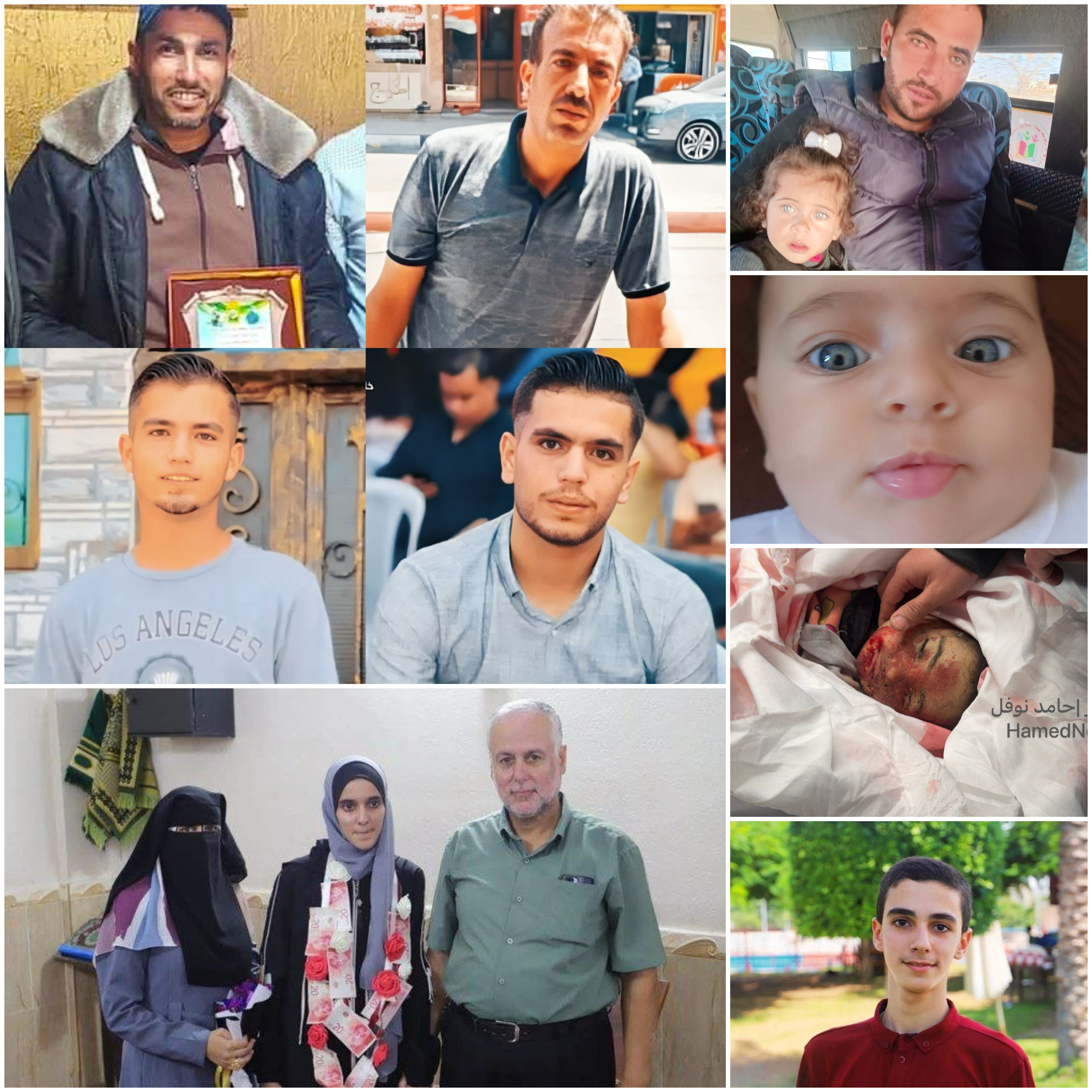
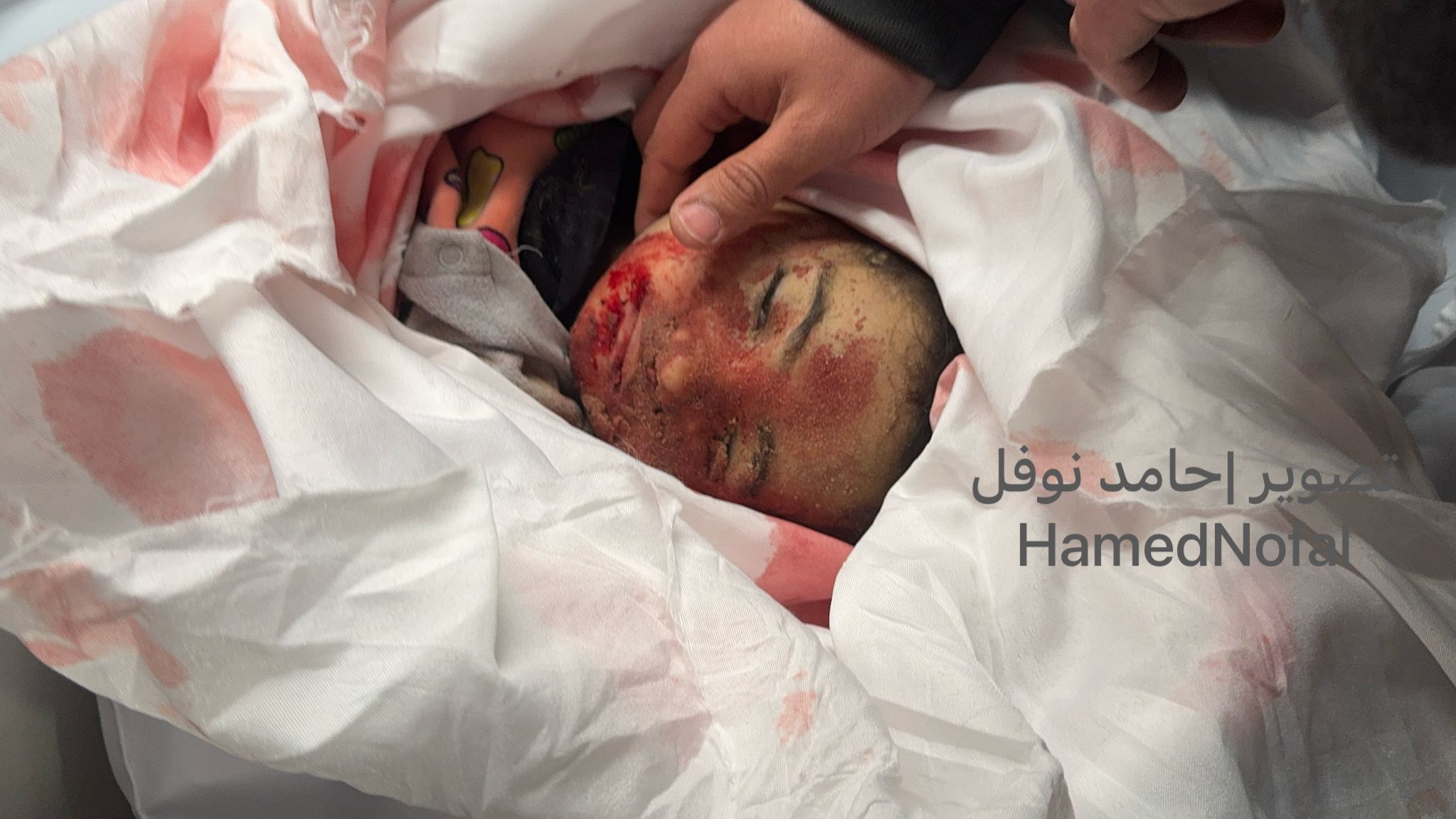
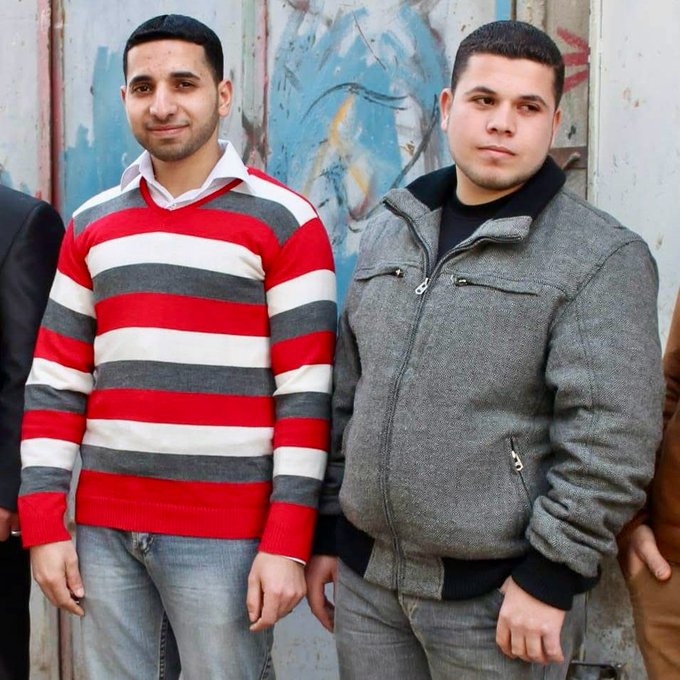
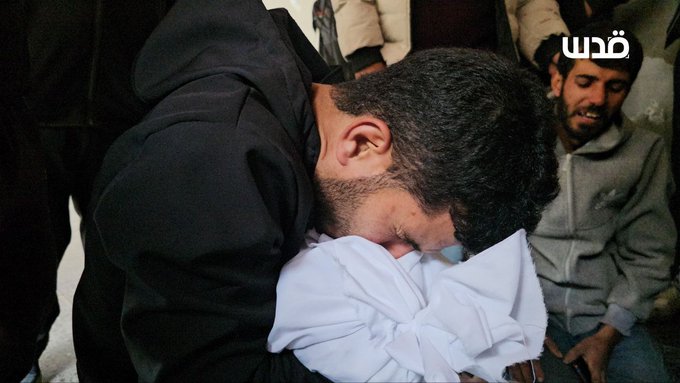
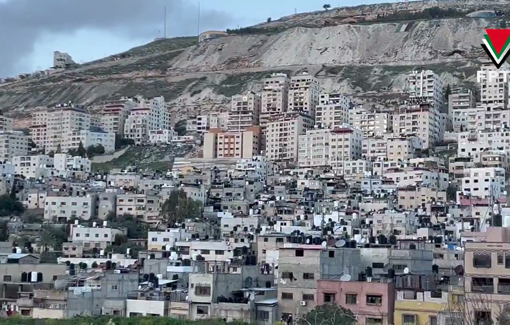
**On January 27**, Israeli forces extended their "Iron Wall" operation in the Tulkarm and Nur Shams camps, besieging them after special forces infiltrated the Rabaya neighborhood within the camp. Snipers were deployed on the rooftops of several houses and buildings at the entrances to the camp and its surroundings. The ongoing aggression caused significant damage to infrastructure, including water, internet, and electricity networks, as well as to citizens' properties, including vehicles and commercial shops. - Two Palestinians were killed and four others were injured in an Israeli drone shelling that targeted a vehicle at the entrance to the Nur Shams refugee camp east of Tulkarem. - Israeli snipers, positioned in a building in the western neighborhood, opened heavy fire and struck the transformer, resulting in a power outage. - Bulldozers and D9 destroyed the area surrounding Jamal Abdel-Nasser Roundabout in the heart of the city, along with the main water network. The demolition also extended to sidewalks and entrances to businesses in the area. - Their D9 destroyed several vehicles parked along the sidewalks. - They besieged the Martyr Thabet Thabet Governmental Hospital with Israeli military vehicles, and operated a lot of destruction (vehicle, tree, street, entrance. They prevented ambulances to join the hospital. - They besieged the Al-Israa Specialized Hospital. - They demolished and damaged infrastructure in the Al-Muqataa neighborhood at the western entrance to the Tulkarem refugee camp - The Palestine Red Crescent Society reported that its crews transported a 24-year-old man who was shot in the foot by live ammunition in Tulkarem. According to PRCS, Israeli forces stopped the ambulance, detained the medical team and forced them to take the injured young man to the military checkpoint west of the city. - The injury of the young man brought the total number of Palestinians injured in Israel’s onslaught on Tulkarem today to six. - Earlier this evening, a young man was also shot and injured in the thigh by Israeli forces' gunfire in the Tulkarem refugee camp. - The Israeli forces raided also Shuwaika suburb north of the city, the town of Anabta to the east, and Faroun to the south, and deployed vehicles and foot patrols in various streets and neighborhoods, obstructing the movement of citizens and vehicles. **Names of the martyrs :** - Ihab Muhammad Atwi - Ramez Bassam Damir ![](https://media.assettype.com/sabq%2F2025-01-27%2Fmfgex8px%2F6797ad6d4c59b740c500ac01.jpg?rect=0%2C95%2C680%2C383&w=1024&auto=format%2Ccompress&fit=max) ![](https://english.wafa.ps/image/NewsThumbImg/Default/b69e6669-cb75-4ee0-916a-9b0bb3528602.jpg) **On January 28**, the Israeli assault of the both camps intensifies, with displacement order, pressure on healthcare, snipers on rooftop. [Testominy](https://x.com/dandoon_danya/status/1884227776846389286) *"My aunts told me there are Israeli Genocide Army snipers scattered on rooftops all over Tulkarm. No one is leaving their home. Schools are cancelled. Tulkarm refugee camp was ordered evacuated and families are staying in local masajid. A pregnant woman in labor was turned back..."* **3 injured were reported wounded by Israeli live bullets or shrapnels :** - A young Palestinian man was injured young man in the face by Israeli gunfire in eastern neighborhood. Despite the injury, Israeli forces obstructed PRCS from transporting him freely to the Thabet Thabet Government Hospital hospital holding them along with the casualty in front of a military checkpoint, west of the city, before detaining him despite he was in serious condition. - A child was injured after being hit by Israeli army gunfire in the chest. He was subsequently rushed to a hospital in serious condition. - A female journalist was injured by bullet shrapnel in the hand after the occupation soldiers opened live gunfire at journalists as the latter were covering the events in the city. **On January 29** - Israeli occupation forces demolished the home of martyr Tamer Fuqaha in Shuwaika, north of Tulkarm. A large military force, including a D10 bulldozer, stormed the area, deployed snipers, and carried out the demolition. Fuqaha’s family had been notified in November 2024 and given 72 hours to object. He was killed on May 4, 2024, after being accused of a shooting in November 2023 that killed an Israeli soldier. The demolition comes as part of an ongoing Israeli assault on Tulkarm, now in its third day, causing casualties, arrests, and widespread destruction.Israeli forces have intensified their operations in Tulkarem camp, imposing a complete blockade, deploying foot patrols, and forcing residents to leave their homes. - According to the Palestinian Red Crescent, Israeli occupation forces storm a Red Crescent ambulance center in Tulkarm and conduct searches at the center in the occupied West Bank. **On the week end of February 2–3, 2025** - Israeli occupation forces have besieged Tulkarm and its camp for the eighth consecutive day. More military vehicles and infantry patrols have been deployed. - On 3 february, At dawn, Israeli forces raided homes in Ezbet al-Tayah, south of Tulkarm, detaining five young men, including two brothers. Homes in the camp were raided, residents expelled, and buildings turned into military outposts for snipers. - Martyr Thabet Thabet Governmental Hospital and Israa Specialized Hospital remain under siege.Ambulances and medical crews are obstructed, searched, and interrogated. - Red Crescent headquarters in central Tulkarm was raided and closed.Humanitarian workers were attacked and detained while evacuating elderly civilians. - Homes and businesses were vandalized, looted, and destroyed. Vegetable stalls in the central market were crushed by military vehicles. Bulldozers caused widespread destruction, leading to a collapse of water, electricity, and communication services. Humanitarian Crisis - Severe shortages of food, medical supplies, drinking water, and baby formula. The elderly, sick, women, and children are particularly affected. A Red Crescent team rescued an elderly man trapped for seven days without food or water. - Sniper Attacks : Israeli forces stationed in seized buildings fired at civilians, injuring a 40-year-old man. **Threats and hindrances:** Threatening leaflets were distributed in the hospitals' emergency areas, and Israeli forces hindered ambulance operations, conducting body searches and identity checks on staff and patients. Targeting and damage: Snipers have been positioned inside homes, targeting residents with direct gunfire, while significant damage has been done to the camp's infrastructure and both public and private properties. - A 70-year-old man was shot in the feet by Israeli forces in the Tulkarem refugee camp on Wednesday evening. PRCS teams responded to the medical emergency and transported the injured man to the Martyr Thabet Thabet Governmental Hospital. The injured man was detained by Israeli forces while being transported by medical staff. - A 54-year-old man sustained head injuries from shrapnel. - A 52-year-old man was shot in the abdomen. - A child was severely injured by a live bullet to the chest in the western neighborhood of Tulkarem city and was transferred to hospitals in Nablus for further treatment. He has been identified as 11-year-old Saddam Hussein Iyad Rajab. He remains in very critical condition during one week and finaly died on February 7. **The status report on February 12** The Israeli aggression on Tulkarm city and its camp has continued for the 17th consecutive day, with the fourth day of aggression in the Nour Shams camp. - The siege on Tulkarm and Nour Shams camp continues, with forced displacement of residents, house raids, and arrests. - The Israeli forces sent more military reinforcements to the area, including infantry deployed across neighborhoods, and the use of live ammunition and reconnaissance aircraft. -Israeli forces raided the "new" Othman bin Affan Mosque in Tulkarm city, arresting displaced citizens. They also arrested Bader Hakam Hijazi from his home and two women (Ruba Al-Saed and Sireen Saidi) in early morning raids. - A young man was injured by gunfire in Kafr Al-Labad, east of Tulkarm. - The occupation forces are still imposing a siege on the eastern neighborhood of Tulkarm, particularly near the camp. Three buildings are being used as military barracks and sniper positions, preventing citizens from leaving their homes. - Residents in the besieged area have called for urgent action from organizations like the Red Cross and Red Crescent to provide food, health services, and facilitate movement. - A house belonging to the al-Awfi family was burned.Additional homes around the camp were seized and turned into military barracks and sniper positions. - The Jabara Bridge at the southern entrance to Tulkarm has been closed for the fifth consecutive day, separating the city from the villages of Al-Kafriyat. **Mass Displacement in Nour Shams Camp:** There has been a new wave of displacement in Nour Shams camp, with dozens of families being forced out under threat and intimidation, amid live ammunition fire and explosions. - Israeli forces raided homes, destroyed their contents, and arrested residents. - Bulldozers have destroyed infrastructure in several neighborhoods of Nour Shams camp, including Jabal al-Nasr, al-Salihin, al-Manshiya, and al-Maslakh, as well as Nablus Street. Humanitarian Crisis: Residents unable to leave their homes on the outskirts of the camp have appealed for food, water, medicine, and baby milk, as basic services like water, electricity, and communications have been cut off due to destruction of infrastructure. **On February 18, the 23rd Day of Tulkarm Invasion** Israeli forces attacked and targeted Palestinians with smoke bombs as they tried to recover their belongings from their homes threatened with demolition orders in Tulkarm in the occupied West Bank. They starting demolishing 16 Palestinian residential buildings under the pretext of expanding streets, amid the ongoing assault on the camp. At this date, at least 12 Palestinians have been killed since January. Local sources stated that the Israeli forces have forced more than 10,000 Palestinians, nearly 80% of the camp’s population, to be displaced forcibly to towns and villages in the Tulkarem Governorate. ![](https://pbs.twimg.com/media/GkD-XJaWgAAjER3?format=jpg&name=small) **On February 20, 2025** - Teacher Ahmad Awad was killed after an Israeli occupation vehicle rammed into the car he and his wife were in today in Tulkarm. With Awwad's passing, the number of Palestinians killed in Tulkarm and its refugee camps during the ongoing Israeli offensive, now in its 26th day, has risen to 12. Among the casualties are a seven-year-old child and two women, one of whom was eight months pregnant. - Coordinated bomb attacks on 3 empty buses in Tel Aviv occurred with an unexploded device labeled 'in retaliation of Tulkarm.' This appears to many observers as an Israeli 'false flag' operation, providing a pretext for violent collective punishment of West Bank and its annexation. **On February 24, 2025** Israeli forces have been attacking Tulkarem city and its refugee camp for 29 consecutive days (Nur Shams refugee camp has been under siege for 16 straight days) while heavy military reinforcements were deployed, including infantry units. - Israeli troops forcibly entering homes, destroying interiors, and converting vacant houses into military outposts. Raids in Dhannaba area, east of Tulkarem, with searches but no reported arrests. - Severe restrictions on movement in and out of the refugee camps.Nablus Road blocked by military vehicles, disrupting traffic and movement. Jubara checkpoint closed for the 17th consecutive day, cutting off Tulkarem from surrounding villages. Relief teams blocked from delivering essential supplies (food, water, medicine, infant formula) worsening conditions for trapped civilians, especially women, children, and the elderly. - Bulldozers and D9 destroyed electricity, water, and communication services disrupted. -> Human rights organizations warn of a worsening humanitarian crisis. Appeals for urgent international action to end the siege and allow aid deliveries. **On March 15** The Israeli military offensive in Tulkarm has entered its 48th day, with forces forcibly displacing the remaining residents of the Muraba'at Hannoun neighborhood in the refugee camp. Troops raided homes, giving residents only minutes to leave under threats of violence, while warning of impending bulldozer and tank deployments. Many displaced individuals, including the elderly and sick, face dire humanitarian conditions. Israeli forces also raided other homes, causing property damage and seizing houses as military outposts. The offensive has led to the mass displacement of around 12,000 people, who are now seeking shelter elsewhere. **On March 26** [Israel’s 58-Day Siege of Tulkarm Leaves Devastation in Its Wake](https://en.safa.news/post/3893/Israel-s-58-Day-Siege-of-Tulkarm-Leaves-Devastation-in-Its-Wake)", transforming entire neighborhoods into war zones. - Armored vehicles patrol the streets, and soldiers occupy homes, evicting families at gunpoint to set up military bases. - Over 4,000 families have been displaced, with Israeli bulldozers destroying or damaging nearly 3,000 homes. Many are now homeless. - The human toll is severe—13 civilians have been killed, including a child and a pregnant woman, while dozens more have been injured or arrested during raids. - Streets that once bustled with life are now in ruins, with barricades, destroyed vehicles, and burnt shops. Basic necessities are scarce, and movement is restricted by arbitrary checkpoints and detentions in Nur Shams camp. Israel's tactics, including home seizures, forced evacuations, and property destruction, amount to collective punishment and violate international law. Despite this, global reactions have been muted, allowing the military's campaign to continue. - The people of Tulkarm face an existential threat, with their camps now resembling ghost towns. Schools and clinics are closed, and survivors feel the erasure of their homes and identity. **At the end of March**, another reason evoked to demolished the camp and create wide corridor inside it comes from the X account of @BenTzionMacales : *"How can you tell when a "refugee camp" has turned into a terrorist base? Before large-scale operations against terrorists from various factions began, but after the security situation in Samaria started to deteriorate, militants began concealing their movements within the camps from the eyes of the IDF by placing black sheets over the alleys. In photos published before the launch of Operation Iron Wall, extensive covering of the alleys in the Tulkarm and Nur Shams camps could be seen. Until the operation, every IDF activity in the camps included removing these sheets, but they would be put back afterward. Creating corridors within the camps will help put an end to this phenomenon."* On April 12-13, 2025 In Tulkarm City ▪️ Israeli forces have continued their assault on Tulkarm city for the 76th consecutive day. ▪️ More than 800 civilians—including women and children—were forcibly evacuated from residential buildings in the northern neighborhood facing Tulkarm Camp. ▪️ Five buildings housing dozens of families, including those displaced from Tulkarm and Nour Shams, were seized and converted into military positions. ▪️ Occupation forces took over additional homes on Nablus Street and in the northern city, turning them into outposts and surrounding them with vehicles. ▪️ Checkpoints have intensified, especially along Nablus Street and the Jabara Bridge gate, restricting movement. ▪️ Heavily armed forces, including “Eitan” armored carriers, stormed the city and stationed near Al-Salam roundabout, stopping vehicles and checking IDs. ▪️ Bulldozers carried out destruction near the Zeinat gas station and other areas, damaging streets and civilian infrastructure. ▪️ Nablus Street remains heavily militarized, with dirt mounds blocking access in both directions. ▪️ Raids were carried out in the Thannaba neighborhood and Deir Al-Ghusoun. Homes were vandalized and residents detained, interrogated, and abused. Casualties and Displacement ▪️ 13 Palestinians have been martyred, including a child and two women—one of them eight months pregnant. ▪️ Dozens have been injured or arrested since the start of the campaign. ▪️ Over 4,000 families from Tulkarm and Nour Shams Camps have been forcibly displaced, along with dozens more from the northern city neighborhoods. ▪️ 396 homes have been completely destroyed and 2,573 partially damaged in Tulkarem and Nour Shams. ▪️ Dirt barriers continue to seal off entrances and alleyways in both camps. **On July 7, 2025** Testimony of a woman displaced from Tulkarm Refugee Camp, describing her and her friend's family's experience: *"I am still displaced. Last month was the most heartbreaking time in my life. We were asked to return to the camps, take all of our belongings, and forget about our homes. They intend to demolish everything, maybe this is because they intend to formally annex the West Bank. So many houses were turned into ruins. And the houses that were not demolished, the IDF vandalized everything, and left the homes in uninhabitable condition. We were forced to take off our shoes and walk barefoot. They were yelling at us, cursing, pointing guns as if we were criminals. We were subject to a very inhumane treatment, whether in this situation, or during the sudden IDF raids in the middle of the night. Now, no one is allowed to come near the areas they have taken over. Otherwise, he will be sniped off. We have heard that more demolitions are planned to happen. Some of these demolitions happened on the first day of Eid. My heart is shattered."* And here she describes her friend's testimony: *"After expelling her family, the soldiers called her husband, and cursed at him in Hebrew and asked for the Wi-Fi password. She told me that the family had just charged the prepaid electricity with 550 shekels. This amount of money would normally last five to six months. The soldiers used it up in less than a week. Then they called her husband again, cursing at him, and they ordered him to top it up. She described the massive destruction and vandalism that they caused. The soldiers had urinated in all the corners of the house, thrown all the types of trash everywhere, scribbled on the walls, stubbed cigarettes out on the furniture, tossed items outside (including electrical equipment, cooking items, utensils, mattresses), and burned the family photo albums, and so many other things. Palestinian women deeply cherish their cup and saucer sets, and they often treat them as very precious and treasured possessions. These sets are typically kept in a safe place for the most important guests and are passed down from one generation to the next. Yet the soldiers, who seem to be fully aware of how precious these items were to the woman, deliberately threw them out the window, and they were completely shattered."* **On July 8:** The Israeli Public Prosecution is appealing a court decision to halt the demolition of more than 100 buildings in Tulkarm camp, equivalent to 400 apartments. Israeli bulldozers resumed demolition operations in the camp today after demolishing more than 100 apartments. **On September 11**, Israeli forces have arrested more than 1,000 Palestinians, a campaign that rights advocates and local officials describe as collective punishment after an improvised explosive device wounded two Israeli soldiers. Data from the Tulkarem Media Committee indicate that more than 600 homes were completely destroyed in recent assaults on Tulkarem and Nur Shams camps, with partial damage to about 2,573 others.

Violent home invasion of released detainees (Ceasefire deal violation)

West Bank 25 January, 2025
At least 3 martyred
**On January 25**, Israeli special forces sormed Hebron and raided several houses in retaliation of the popular celebration organized for the prisoner released in part of the ceasefire agreement. Homes of released detainees Mashhour al-Rajabi and Ahmed Yaqeen al-Jaabari were stormed. Soldiers threatened to re-arrest detainees if reception ceremonies were held. Widely, Shops were forced to close as soldiers opened fire with live rounds. **Abu Sneineh Neighborhood, Hebron City:** Israeli forces stormed the home of Akram Badawi, a released detainee. A 17-year-old was shot in the head with a rubber-coated steel round during celebrations, requiring hospital treatment. Soldiers fired concussion grenades, tear gas, and rubber-coated rounds at civilians. **Beit Ummar Town (North of Hebron):** Israeli forces stormed the Al-Bayada area, sparking protests. oldiers fired live rounds, rubber-coated steel bullets, and tear gas, causing many to suffer inhalation injuries. Victims were treated at a medical center. **Jabal Jawhar Area, Hebron City:** Four young men were assaulted by Israeli forces, sustaining injuries that required hospital treatment. **Nablus (Northern Occupied West Bank)** **Qabalan Town (South of Nablus):** Home of released detainee Anas Al-Aqraa was stormed. Tear gas and concussion grenades were fired, causing inhalation injuries. Citizens were physically assaulted by soldiers. **Al-Ram and Al-Eizariya Towns:** Home of released detainee Ibrahim Abu Sneineh was invaded. Citizens were prevented from gathering to welcome the detainee. **Ramallah and Al-Biereh Governorate (Central West Bank)** Homes of multiple released detainees were stormed. Families were threatened with consequences if celebrations were organized for the released detainees. This organized summary provides a location-based overview of the incidents reported.

Murder of Ahmad Mahmoud Hashash

West Bank, Nablus, Balata 25 January, 2025
At least 1 martyred
On January 25, Israeli forces raided the Balata RC near Nablus. This is part of the incursion campaign across all urban areas of the West Bank, which has been underway since the ceasefire in Gaza and the "Iron Wall" operation in Jenin. Large Palestinian crowds had gathered during the day to welcome prisoner released as part of the ceasefire agreements A video circulating on social media shows the moment Ahmad Mahmoud Hashash, 42-year-old, was shot with live bullets while trying to seek shelter in an alley. Ahmad Mahmoud Hashash, succumbed to his injuries on Saturday evening. He was critically injured by live fire during the incursion and was transported to a hospital in Nablus, where his death was later confirmed. During the raid Israeli forces deployed snipers on rooftops and used live ammunition and tear gas during the attack. The raid came as the occupying forces were conducting raids into the houses of prisoners set free as part of the second batch under the Gaza ceasefire agreement to prevent any "public displays of joy”.

Re-abduction of Ashraf Zaghir

West Bank, East Jerusalem 25 January, 2025
**On January 25**, in the evening, Israeli special forces sormed Hebron and raided several area in occupied Jerusalem in retaliation of the popular celebration organized for the prisoner released in part of the ceasefire agreement. Israeli forces shot two Palestinian young men and abducted another after storming the homes of ywo released detainee, in the town of Kafr ‘Aqab, north of occupied Jerusalem. They re-abudect the released detainee, Ashraf Zaghir, arrested also his brother, and opened fire at citizens with live rounds and tear gas canisters, shooting two young men with live rounds. **Jerusalem Governorate statement :** They announced that the army detained the released detainee, Zaghir, after breaking into his home, and abducted his brother, Amir Zaghir. The Jerusalem Governorate added that Israeli forces invaded the town of Al-Ram, and the town of Al-Eizariya, north and east of the city, and stormed the home of the released detainee, Ibrahim Abu Sneineh, and prevented citizens from gathering to receive him.

Killing of 2 y/o girl Laila Al-Khatib in Martyrs' Triangle

West Bank, Qabatiya, Muthalat al-Shuhada (Martyr's Triangle) 25 January, 2025
At least 1 martyred
On January 25, 2025, the Palestinian news agency Wafa, citing the Palestinian Red Crescent Society (PRCS), reports that a two-year-old girl has been shot in the head during an Israeli raid on Muthalath Ash-Shuhada/ Martyr's Triangle, a village south of the occupied West Bank city of Jenin. According to her family, they were eating dinner at home when the gunfire started. It was around 8 p.m. on Saturday, Jan. 25, and Israeli soldiers had entered their village of Muthalath Al-Shuhada, located near Jenin in the occupied West Bank. Suddenly Israeli sniper lasers appeared inside the house, and bullets were suddenly fired directly at them. She was her mother’s only child, as her father had passed away when she was still an infant. The PRCS is reported to have added that its crews had transferred the injured child to a hospital for treatment. Around 22:20, Palestinian Ministry of Health : "The child Laila Al-Khatib (two and a half years old) died of critical wounds after being shot in the head by the occupation forces in the Martyrs' Triangle in Jenin." **Testimony of Bassam Assous, the Leila grand-father :** ([source](https://www.972mag.com/jenin-israel-campaign-road-closures/)) *“The windows and shutters were closed — we had no idea what was going on outside until we heard shooting very close by,” Assous and his wife, Ghada, quickly moved away from the windows, while their two daughters, Shaimaa and Teema (the Leila's mother), hid in a bedroom with Teema’s 2-year-old daughter, Laila. Suddenly, Assous heard his daughters screaming. “I rushed to the bedroom with my wife; Shaimaa was holding Laila tightly, while Teema was screaming next to them,” he recounted. “I took hold of Laila, and my hands quickly became covered in blood. It was coming from her head — she had been hit with a bullet.” Carrying his granddaughter, bleeding and unconscious, Assous ran outside to the street only to find that it was full of Israeli soldiers and armored vehicles. “My wife screamed, ‘Why did you kill the girl? What did she do to you?’” he continued. “One of the soldiers, standing some distance away, responded, ‘Sorry.’ “I shouted back, ‘Why did you shoot her?’” Assous went on. “The soldiers pointed their weapons at me and told me not to come closer. My wife kept screaming, and one of the soldiers pointed to a spot 100 meters away and told her, ‘Go over there and wait for an ambulance.’” When the ambulance arrived, Ghada got in with Laila. Shaimaa, who had sustained shrapnel wounds from the shooting in her jaw and side, and Teema, who had shrapnel wounds in her right hand, also needed treatment. “I told the soldiers I wanted to go with my daughters, but they said, ‘No, you will come with us,’” Assous added. “The soldiers took me to my uncle’s house, where they had already detained four of his sons while my uncle and the rest of the family sat nearby,” he recounted. “I had no idea what was happening with my wife and daughters — we weren’t allowed to use our phones or even speak. When I insisted on calling, a soldier threatened to handcuff me. I remained detained like this until around 11:30 p.m. when the soldiers withdrew from the area. They didn’t arrest anyone or confiscate anything. “After the soldiers left, neighbors came to check on us,” Assous went on. “That’s when I learned that Leila had passed away, as they began offering their condolences. I was in shock, but I quickly realized I had to appear strong for my daughter Teema, who broke down in tears and couldn’t comprehend the loss of her child. I took her to a nearby medical center, where she was given sedatives.” Assous explained that Teema — who is a master’s student at An-Najah University in Nablus, specializing in environmental and water engineering — had already lost her husband, Mohammad Al-Khatib, two years ago in a workplace accident. “She had been struggling with the trauma of losing her husband, so I brought her and her daughter to live with us at home,” he explained. “She used to say, ‘I just want to raise my daughter and take care of her.’ Now, she keeps asking me, ‘Why did they kill my daughter? What did this little child do to deserve this?’”* **Israeli Army statement** In response to +972’s inquiry, a spokesperson for the Israeli army said it “regrets any harm caused to uninvolved civilians,” and claimed it had received intelligence about terrorists barricading themselves inside a building in the village. According to the spokesperson, soldiers warned everyone inside “multiple times” to exit before opening fire. Assous denied hearing any such warning. **Context :** Israeli special Israeli occupying forces barged their way into the village and besieged a house, earlier in the evening. They deployed snipers around the house and ordered the occupants to come out via loudspeakers, triggering confrontations. A woman sustained an injury to the hand from live ammunition fired by Israeli soldiers. She also was injured in the head by bullet shrapnel. **Name of the young martyr** : - Laila Muhammad Al-Khatib ![](https://static.972mag.com/www/uploads/2025/01/cousin-Rabia3.jpg) *The holes left by Israeli army bullets in the window of his family's home* ![](https://static.972mag.com/www/uploads/2025/01/main_image55712_brsG4ozk4r-1200x802.jpg) *Bassam Assous holds the body of his granddaughter, Laila Al-Khatib, after she was killed in her home by Israeli forces, Jan. 26, 2025. (Wahaj Bani Moufleh/Activestills)* ### **B'Tselem investigation:** [source:](https://www.btselem.org/htmx/216766) On Saturday evening, 25 January 2025, Israeli soldiers entered the village of Muthallath a-Shuhada in Jenin District in three civilian vehicles with Palestinian license plates, and took over the home of the a-Sukar family on the main street. Around 7:30 P.M., while the ‘As’us family was preparing to sit down to dinner in their second-floor apartment across from the commandeered building, they heard gunfire on the street. At home at that time were Bassam ‘As’us (58), his wife Intisar (51), and their three daughters: Shaymaa (22), Nimar (18), and Taymaa (25), along with Taymaa’s 2-year-old daughter, Layla. The family sat on the floor, hoping it would be safer. Bassam and Intisar ‘As’us remained in the living room while the daughters and granddaughter went into their room. While the family was sitting on the floor, gunfire suddenly erupted toward the house. Taymaa and Shaymaa were injured by shrapnel in their upper bodies, and Layla, who was sitting in her mother’s lap, was critically injured by a bullet to the head. Bassam and Intisar picked up the toddler, who was bleeding heavily, and rushed downstairs to the street, where they encountered soldiers in uniform. They also saw soldiers looking out of the second-floor window in the a-Sukar home, which faces their own. Bassam, who was carrying the bleeding child, asked an officer why they had fired at his home, and the officer apologized. The couple hailed a local car that took them to the medical center in the nearby town of Qabatiya. From there, a Red Crescent ambulance took them to a-Razi Hospital in Jenin, where Layla was declared dead after attempts to save her life. Meanwhile, a relative called an ambulance that took Taymaa and Shaymaa to the same hospital, where they were treated and discharged that evening. The soldiers remained in the village until 11:00 P.M. During that time they engaged in sporadic exchanges of fire with armed Palestinians, with no additional casualties, and raided three other homes, apparently in search of armed operatives, but no arrests were made. In a response to Haaretz, the military stated that the soldiers fired at the house "where, according to intel, a wanted terrorist was barricading himself" and that "immediately after noticing they had hit the child, the soldiers called the Red Crescent and also evacuated the child's pregnant mother." The military later added that "the forces arrived at the building and began operating gradually, including several calls on the loudspeaker for the people in the house to come out. After no one came out, the forces continued with their procedure and opened fire […] the incident will be investigated, and lessons will be learned accordingly." However, B’Tselem's investigation found that the family did not hear any calls directed at their house and that Layla was evacuated in a civilian car, while her mother, who was not pregnant, and her aunt were evacuated by an ambulance summoned by a relative. Furthermore, no one was barricaded in their apartment, and the only man in it that evening was Bassam ‘As’us. B’Tselem field researcher Abdulkarim Sadi gathered testimonies from family members on 26 January 2025: **Layla’s mother, Taymaa al-Khatib, a 26-year-old widow, said in her testimony:** *On Saturday evening, around 7:30 P.M., my mother Intisar was preparing pita bread with za'atar for dinner. I was sitting at the dining table in the living room with my daughter Layla in my lap. My sisters Shaymaa and Nimar were sitting next to me. Suddenly, we heard gunshots near our house, which is on the main street that runs through the village. We got a real fright, because we didn’t even know the army was in the village.* *In the living room there are windows facing the main street. My sisters and I crouched down and crawled to our room, which is opposite the living room, and sat down on the floor there, below the height of the windows. We took our food with us. Layla was scared and sat on my lap. My parents sat down on the floor in the living room.* *A few moments later, shooting started into our house. We didn’t understand where the shots were coming from. Layla was shot in the head while sitting on my lap, and blood burst out of the back of her head. My sister, who was sitting next to me, was hit by shrapnel. About the same time, I think I was hit by shrapnel in my right arm, but I didn’t feel it at the time. It was terrifying and we started screaming. My parents were sitting in the part of the living room that’s protected by a concrete wall. They weren’t hit but were in shock. They grabbed Layla and went down to the street, and we followed them.* *We were surprised when we saw soldiers on the street near the home of the a-Sukar family, right across from our house. My father was holding Layla in his arms, and her head was still bleeding. He started yelling at the soldiers in English. One of the soldiers looked at my child and I heard him say to my father in English: 'I'm sorry.'"* **Layla’s grandfather, Bassam ‘As’us, 58, a father of five, said in his testimony:** *The girls were sitting on the floor of their room to eat when the shooting started toward our windows. My wife Intisar and I were sitting on the floor in the living room. My granddaughter Layla was sitting on her mother’s lap, who was feeding her, and suddenly she was shot in the back of the head. My daughters were also injured: Taymaa was hit by shrapnel in her right arm, and Shaymaa was also hit by shrapnel.* *The house was filled with screaming by the entire family. My wife and I picked up the child, who was bleeding heavily from the head, and went down the stairs. Outside, I saw soldiers near the house of our neighbors, the a-Sukar family, which is right across from our house. I also saw soldiers positioned in the window of the a-Sukar family’s home, which directly faces the windows of my house. They were holding rifles aimed at us.* *I started yelling at one of the officers in English. I asked him why they’d killed the child. The officer came over, looked at my granddaughter, and said to me in English: 'I’m sorry, she was hit by mistake.' We tried to call an ambulance, but there was no ambulance nearby, so I walked with my wife and the girls to find a car to take Layla to the nearest medical center. After 100 meters, we stopped a local car that me, Intisar and Layla to the medical center in Qabatiya. From there, we were transferred by a Red Crescent ambulance to a-Razi Hospital in Jenin. The doctors there tried to save Layla’s life, but the injury was fatal and she didn’t make it.*

Drone strike and Besieged house in Qabatiya

West Bank, Qabatiya 24 January, 2025
At least 2 martyred
Since dawn, the town of Qabatiya is subjected of various Israeli special forces operations. **Raid on houses** Israeli forces raided the home of captive Zakaria Zubeideh in Jenin camp, tying up and blindfolding his wife, daughter, and son. Israeli forces surrounded a house in the town, fired Energa grenades at it, and raided nearby homes. Invading Israeli units also turned the area around the Jenin refugee camp into a staging ground for operations targeting Qabatiya and Ya’bad. Theyraided houses adjacent to the besieged house in the town of Qabatiya, south of Jenin. They arrested a Palestinian youth from Qabatiya before withdrawing from the area. Israeli units deployed additional reinforcements to Qabatiya while an Apache helicopter hovered overhead. **Drone strike on a car** Israeli drones struck a car in the town of Qabatiya, south of Jenin Refugee Camp, killing at least two Palestinians and injuring an un determined number. Israeli troops entered Qabatiya following the attack, deploying across the town and heightening anxiety among the residents. **Victims names** - Mohammed Al-Amer Zakarneh, - Muhammad Raouf Kamil

Incursion campaign in the West Bank localities

West Bank 23 Jan, 2025 - 26 Jan, 2025
Since the ceasefire in Gaza on January 19, 2025, Israel has launched a particularly bloody and destructive operation (Iron Wall) against the city of Jenin and the surrounding localities. At the same time, operations to strengthen the occupation and block localities are taking place on a daily basis. A campaign of obstruction is being carried out across all entrances, exits, and checkpoints in the West Bank, with the addition of numerous filtering or blocking points. Each locality is being isolated from the others. At the same time, special forces and armored vehicles carry out numerous raids across various localities. These raids may be motivated by special operations such as arrests or acts of reprisal for moments of celebration welcoming Palestinian prisoners released as part of the ceasefire agreement. In some areas, snipers are deployed, while in others, D9 bulldozers destroy infrastructure. The entire system makes life for Palestinians even more unbearable and harshly reinforces the weight of the occupation

Besieged house and extrajudicial executions in Burqin

West Bank, Jenin, Burqin 22 January, 2025
At least 2 martyred
**On January 22,** in the evening, Israeli occupation forces besieged a house during 5 hours, sheltering resistance fighters involved in the Al-Funduq attack against a bus of settlers ten days ago. - Media sources said that an undercover Israeli force infiltrated the town and besieged a citizen’s home in Burqin town. - Israeli forces have also used rockets and drones in their clashes. Additional reinforcements have been sent to the village as the siege continues. - Hassan Sobh, the town’s Mayor, told the WAFA News Agency that the Israeli army used women and children as human shields, demanding they evacuate the building over loudspeaker. - The both men refused to surrender and engaged in intense clashes with the forces in Burqin, west of Jenin. For at least the ninth time, Israeli forces targeted their house with a shoulder-fired missile. Part of the besieged house collapsed due to the repeated shelling. - The army then opened heavy fire at the home, fired “Energa” anti-tank grenades at it, and carried out several drone strikes, executing the two young men, and detaining their bodies. - Two Israeli soldiers were wounded during the operation. - The Palestinian Red Crescent Society (PRCS) reported that the owner of the bombed home, a 60-year-old citizen was transported to hospital after soldiers shot him in both of legs with live ammunition. - On Thursday morning, the Palestinian Health Ministry confirmed the deaths of the two young men, Qutaiba Walid Ahmad Shalabi, 30, and Mohammad Asad Mahmoud Nazzal, 25, adding that the army confiscated the bodies of the slain young men. - Israeli forces arrested 3 young men. **Martyrs names**: - Mohammad Asad Mahmoud Nazzal, 25 - Qutaiba Walid Ahmad Shalabi, 30

Checkpoints Obstruction campaign in the West Bank.

West Bank 22 January, 2025
Since the ceasefire agreement, Israeli forces escalated its assault on Jenin, by enforced the largest scale of road closures and checkpoints in the West Bank since the second Intifada. - in some instances soldiers are checking a car every 30 mins then closing the checkpoint. Others reported soldiers chatting, laughing, and taking selfies while thousands of vehicles remained stuck for hours. - The closures are enforced to prevent Palestinians from moving through cities effectively creating a siege surrounding every city from the North to the South. - Just in Bethlehem, Israeli forces sealed the entrances/exits with 89 gates, barriers, and concrete blocks - Social Media are used by Palestinian to inform their community about the better way to reach some location. - The main goal in instauring checkpoints obstruction like Bethlehem, Salfit, Nablus, Jericho, Ramallah, Hebron, is to suffocate Palestinians into submission to the zionist settler colonial project. **Increased Checkpoints and Roadblocks:** Following the ceasefire, Israeli authorities imposed additional measures to strengthen security in the West Bank. According to reports, 146 iron gates were added in January alone, bringing the total number of roadblocks and gates in the West Bank to 898. These barriers have significantly limited Palestinians' ability to move freely between cities and villages, often leaving them stranded for long periods. **Military Justification vs. Public Perception:** The Israeli military justifies the extensive use of checkpoints and gates as a security measure to apprehend militants and prevent "terrorist" attacks on Israel. However, Palestinians and human rights organizations argue that these measures are punitive and contribute to a broader strategy of control and suppression.Critics, including Israeli human rights groups, suggest that the Israeli government’s actions reflect a shift of focus from Gaza to further control and suppression of Palestinians in the West Bank. **Consequences on daily lives** - The new security measures have disrupted daily activities. For example, residents of towns like Taybeh and Birzeit have reported waiting hours at checkpoints, sometimes stuck in their cars from late afternoon to the early morning. - Palestinians describe the new conditions as being similar to living in a "cage," where they can only go out during the day and are forced to return home by evening due to the restrictions. - Impact on ability to work, with Palestinians losing significant amounts of work hours due to long waiting times at checkpoints. This further exacerbates economic strain and complicates daily planning. - being unable to make even short-term plans due to the unpredictable nature of checkpoint controls.The inability to plan ahead and the feeling of being under constant surveillance contribute to a growing sense of stress and insecurity. **Qalandia checkpoint obstruction** Qalandiya is an Israeli military checkpoint located between Ramallah and Jerusalem in the occupied Palestinian territories. It is a crucial transit point for Palestinians traveling between the northern and southern parts of the West Bank. Approximately 9,000 vehicles pass through Qalandiya checkpoint daily, highlighting its heavy usage and importance for local commuters. Due to Israeli traffic restrictions, the adjacent road has become an essential route for movement from Ramallah to the southern West Bank. **Nablus area obstruction** The Israeli forces tighten their measures at the military checkpoints surrounding the city of Nablus. They set up 10 permanent military checkpoints around the city of Nablus, installed 36 iron gates at its entrances and the surrounding villages, and closed more than 47 sites with earth mounds, preventing thousands of local residents from reaching their homes and destinations On February 2, for nearly two weeks, Israeli forces have tightened military measures at checkpoints around Nablus, causing severe traffic. They have also set up flying checkpoints, searching vehicles and checking citizens' IDs. **On January 26 :** **Salfit:** A military checkpoint was established near the entrance to Qarawat Bani Hassan, causing major traffic congestion. Entrances to the city of Salfit and the villages of Bruqin, Kifl Haris, Deir Istiya, and Kafr Ad-Dik were blocked by metal gates, limiting access. **Bethlehem:** The Israeli military sealed the main entrance to the village of Al-Manshiya by locking its iron gate late last night. This closure cuts off the only road connecting rural southern areas to Bethlehem, a key city for services and commerce. **Northeastern West Bank (Jordan Valley):** Israeli forces strengthened restrictions at the Tayasir and Hamra checkpoints in the northern Jordan Valley. Palestinian vehicles were blocked from passing through these checkpoints, causing long queues and significant delays. **Ramallah Area (Central West Bank):** The Israeli military significantly increased restrictions around the **city of Ramallah**. Key roads were closed, including the Birzeit-Attara gate, the northern entrance to Al-Bireh, and the Nabi Saleh gate to the northwest. Intense searches were conducted at the Ein Sinya checkpoint, causing severe traffic jams. A new military checkpoint was installed at the entrance to the **village of Aboud**, northwest of Ramallah, severely impacting local traffic. **At the Attara checkpoint**, identity card checks were conducted, leading to significant delays and disruptions. **Mustafa Barghouti @Mustafa_Barghouti statement** *"There is an Israeli war of checkpoints in the West Bank. The Israeli army is enhancing its collective punishment against millions of Palestinians in the West Bank . It increased the number of military checkpoints in the West Bank to 898. Each checkpoint is designed to be a place for harassment, humiliation, and obstruction of movement. It often also becomes a dangerous place where many Palestinians are killed. According to the Israeli newspaper Haaretz, the checkpoints were ordered by the Israeli Government to obstruct and harass Palestinian civilian movement in the West Bank during the period of the ceasefire in Gaza. According to Haaretz, many Palestinians spend long hours waiting at checkpoints, sometimes for 5-8 hours. According to reports we received, many Palestinians had to spend several nights in other cities or villages they were visiting for work, business or medical care because they couldn’t travel back to their homes since the Israeli army closed down the gates or the checkpoints to their towns or villages. Many of the checkpoints are gates that the army can close any time, and as long as they wish. A trip from Ramallah to Jericho, which usually takes 45 minutes, can now take 5 hours some days. Most of the movement from the South and North of the West Bank is paralyzed while illegal Israeli settlers move freely and continue to attack Palestinian cars on the roads. The gates and oppressive checkpoints are not only a system of collective punishment but are also consolidating the Israeli apartheid against Palestinians."*

Jenin hospitals under siege (Operation "Iron Wall")

West Bank, Jenin 22 January, 2025
At least 1 martyred
Jenin Hospital has been under siege since January 22. On January 21, Israel killed at least 10 Palestinians and left more than 35 wounded in a large-scale operation ("Iron Wall") in the occupied West Bank city of Jenin. “Iron Wall,” operation includes IDF troops, Israel Security Agency (Shin Bet) officers and Border Police, according to the Israeli military. **Name of the victims** 1. Dr. Nader Irsheid, 2. Dr. Khaled Zakarneh, 3. Dr. Abdullah Al-Thaher, 3. nurse Muhammad Amarneh, 4. nurse Ashraf Alauna (both were injured in different locations, near Jenin Governmental Hospital? Al-Amal Hospital, and Al-Razi Hospital) **1. Jenin Governmental Hospital:** More than 600 displaced individuals sought refuge, with the hospital surrounded by military forces and cut off from food for an entire day. Despite attempts to coordinate food delivery, the Israeli military blocked it. Director Wissam Bakr reported that bulldozers made it difficult for medical teams to enter or exit the hospital. Bakr described the situation as tragic, fearing an assault or shooting by the Israeli army. During the night, Israeli forces bulldozed the road outside the Jenin Governmental Hospital, effectively blocking access to the hospital for ambulances. On the morning of January 22, a Roya journalist reported that Israeli forces requested Palestinians evacuate the Jenin Government Hospital and gave patients eight hours to leave. They ordered citizens to walk on foot through a security corridor to the Al-Awda Roundabout, where everyone would be thoroughly inspected. They evicted the Jenin Governmental Hospital. The patients were seen walking on foot, using the bulldozed street before the deadline passed. According to Medical Aid for Palestine (MAP), medics claimed that "minimal staff are inside and they are not allowed to leave." "No supplies, not even basic items like bread, are permitted to enter. Meanwhile, the rest of the hospital staff outside are being prevented from reaching the facility." At the end of the morning, a group of Palestinians were arrested by Israeli forces in front of the entrance. The loud noise of military vehicles and bulldozers, combined with threats over loudspeakers, made the residents fear the hospital could face the same fate as those destroyed by Israeli forces in Gaza. **2. Al-Amal Hospital:** The siege was more violent, with soldiers firing indiscriminately into the courtyard, wounding at least three doctors and two hospital workers. The situation was chaotic, with gunfire heard throughout the hospital grounds. A nurse was shot behind the hospital and left bleeding until rescued by a paramedic. The hospital remains under strict siege, with only one ambulance allowed in or out, constantly inspected. Food delivery is only possible through this ambulance, with its staff under constant threat. **3. Al-Razi Hospital & Palestinian Authorities Collaboration** Coinciding with the Israeli occupation's aggression, the PA's security forces, affiliated with the Fatah movement (PLO), arrested a wounded young man after besieging and storming the Al-Razi Hospital in Jenin. They also shot a young man in the head. The Director of Al-Razi Hospital in Jenin to Al Jazeera: There are two serious injuries by occupation bullets after clashes in front of the hospital. Security forces affiliated with the Authority stormed the patients' section of the hospital after gunfire. PA security forces stormed the hospital, arresting a wounded man believed to be a member of the Jenin Battalion and wanted by the Israeli army. This marked the first time Palestinian forces publicly participated in an Israeli military assault in the West Bank. **Context :** Israeli occupation forces have intensified their deadly raid in Jenin, in the occupied West Bank, destroying infrastructure, displacing around 2,000 families, and forcing the evacuation of the public hospital under direct threat. **January 23: evacuation of Jenin Hospitals continues** lsraeli forces continue to evict Palestinians from the vicinity of Jenin Camp, including patients in Jenin Governmental Hospital. ![ January 23: evacuation of Jenin Hospitals continues](https://www.maannews.net/cached_uploads/resize/812/1674/n/2025/01/23/a47924e6-d14f-459c-b941-d5c230d07d53-1737622880-jpg-1737622880.wm.jpg?_mhk=e7045e62dc3ddbac9f42bc5912f3d2177b068f451a14131193e59ad69107b3f6362be1b45495dc26d3bb782c7e79fde7) **Janurary 24 :** The infrastructure destruction around the Jenin Governement Hospital continues. The roads and the building are so deeply destructuct that the ambulances cannot reach the entrance of the hospital. **On January 25:** Deputy Spokesperson for the Secretary-General of the United Nations : “Reports indicate that Jenin Governmental Hospital is still without water & electricity, due to the Israeli aggression.” “Reports indicate difficulty in reaching Jenin Governmental Hospital due to damaged roads.” **On January 26:** Israeli occupation forces also continue to block access to the Jenin Government Hospital, hindering the entry and exit of civilians. **On January 28-29:** The occupation forces continue to obstruct the work of ambulance crews in the city of Jenin, as they detained ambulances during the night in the industrial zone, the Post Street area, and the main roundabout. They also tighten their entry and exit to the Jenin Governmental Hospital, and check the identities of paramedics. A woman and her son, attempting to reach Jenin Government Hospital, were forced to leave their car, searched, and prevented from reaching the hospital. The woman fainted. This incident is an indication of the consequences faced by the people of Jenin due to health access obstruction. **Statement of UN human rights office** Thameen al-Kheetan, of the UN human rights office, called Israeli tactics in Jenin “deadly operations”, after Israel targeted a refugee camp in the centre of the city and besieged a nearby hospital : “We are deeply concerned by the use of unlawful lethal force in Jenin, in the occupied West Bank,” he said on Friday, criticising “methods and means developed for war fighting, in violation of human rights law … this includes multiple airstrikes and apparently random shooting at unarmed residents attempting to flee or find safety.”

The details for each video come from social media. None of it has been verified.

HNS.to is a highly insecure way of browsing Handshake domains and should only be used for demo or educational purposes. Click to see preferable resolutions methods